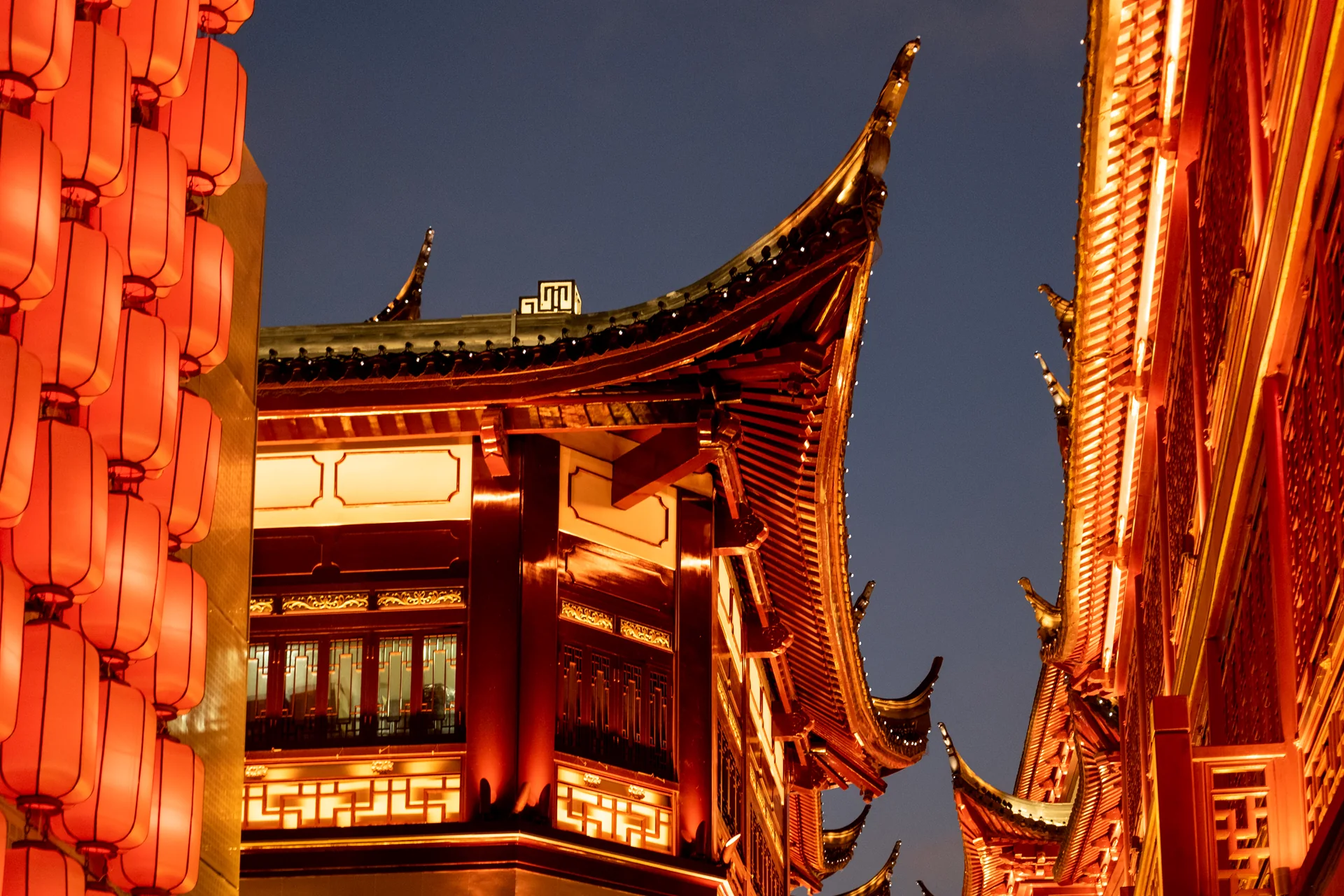
The six rites
The six rites
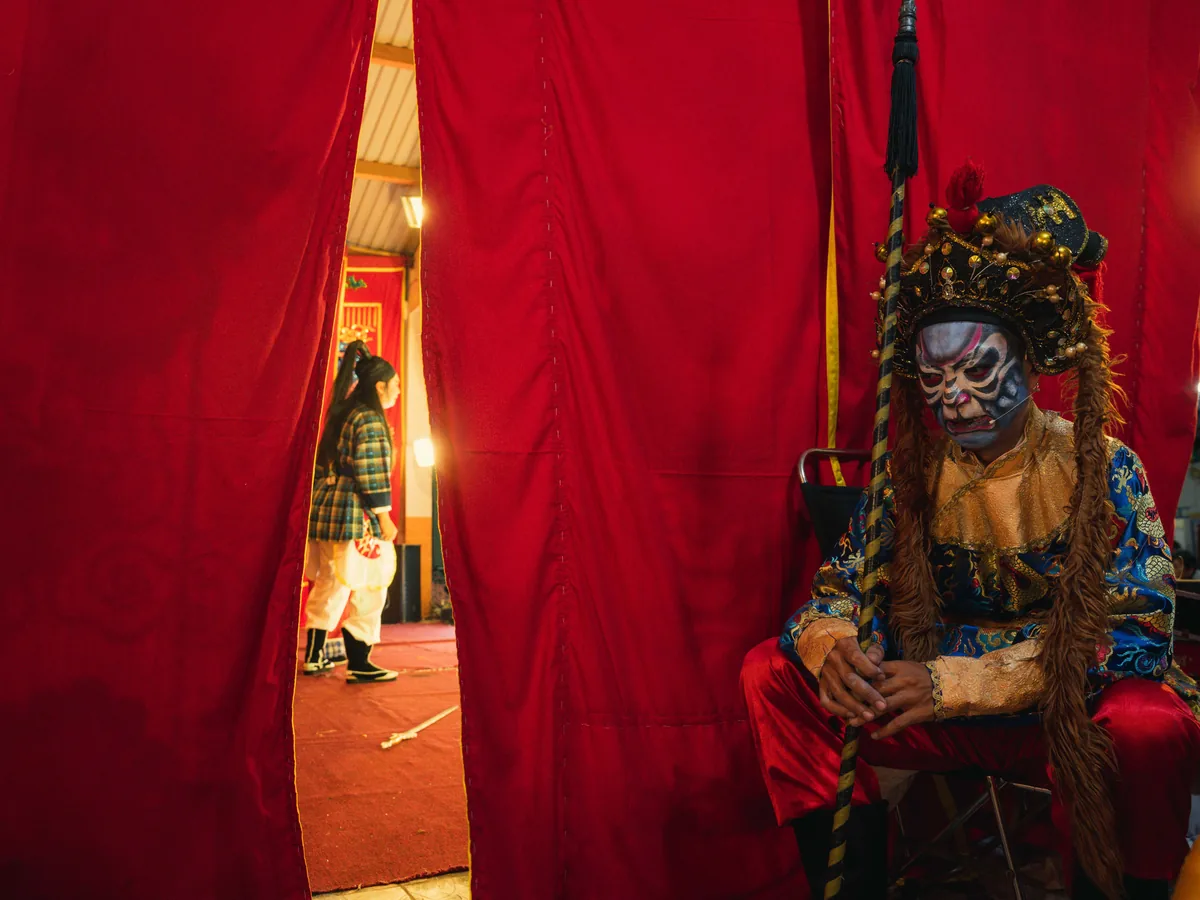
The hall builds its set menu around six staged rites drawn from classical court ceremony, so each course of the evening arrives with its own piece of performance rather than all at once.
- I
The offering rite
A ceremonial offering drawn from classical court ritual opens the evening, performed before the first course reaches the table.
- II
The welcome rite
A welcoming ceremony greets the room next, the format the hall uses to settle every sitting in before the meal properly begins.
- III
The music rite
Live music carries the room from the welcome into the meal, playing through as the next course is carried out.
- IV
The dance rite
Costumed dancers take the floor for the next stretch of the evening, moving through the hall as another course arrives.
- V
The opera rite
A sung theatre excerpt follows — the hall's own repertoire draws on forms such as Kunqu — closing out the performed portion of the night.
- VI
The celebration rite
A closing celebration rite brings the banquet to its final course, the same format run at both the midday and the evening sitting.
Check-in is fixed to whichever sitting you book — 11:30am for the midday sitting, 6:30pm for the evening one — and the room is seated together before the first rite begins.
A Han-culture hall in Jing'an
A Han-culture hall in Jing'an
A food theatre built around Han culture
Gong Yan, whose name translates roughly as palace banquet, stages each course of the evening inside a hall dressed to recall an imperial court, built around what the booking page itself calls Han cultural food and a thousand-year palace atmosphere.
Kunqu and a dance-drama of Xi Shi
Among the pieces the hall stages is Kunqu, a sung theatre form that began in the Ming-dynasty city of Kunshan and was named a UNESCO Masterpiece of Oral and Intangible Heritage in 2001, alongside a dance-drama built around Xi Shi, a legendary beauty from China's Spring and Autumn period.
Hanfu for the night
Guests can add a Hanfu outfit and styling as a paid add-on, arranged on site before they're seated. Hanfu is the historical Han Chinese clothing that fell out of everyday use under the Qing dynasty and has seen a documented revival since the early 2000s.
Jing'an, a temple district turned dining strip
The hall sits on Beijing West Road in Jing'an District, named for Jing'an Temple, a Buddhist temple first built in the 3rd century AD and moved to its present site, on what's now West Nanjing Road, in 1216 — the surrounding blocks today mix temple, metro interchange and dining halls like this one.
The hall and the table
The hall and the table
Dinner is served inside a dining hall dressed to recall an imperial court, built around a set, course-by-course menu rather than an à la carte order.
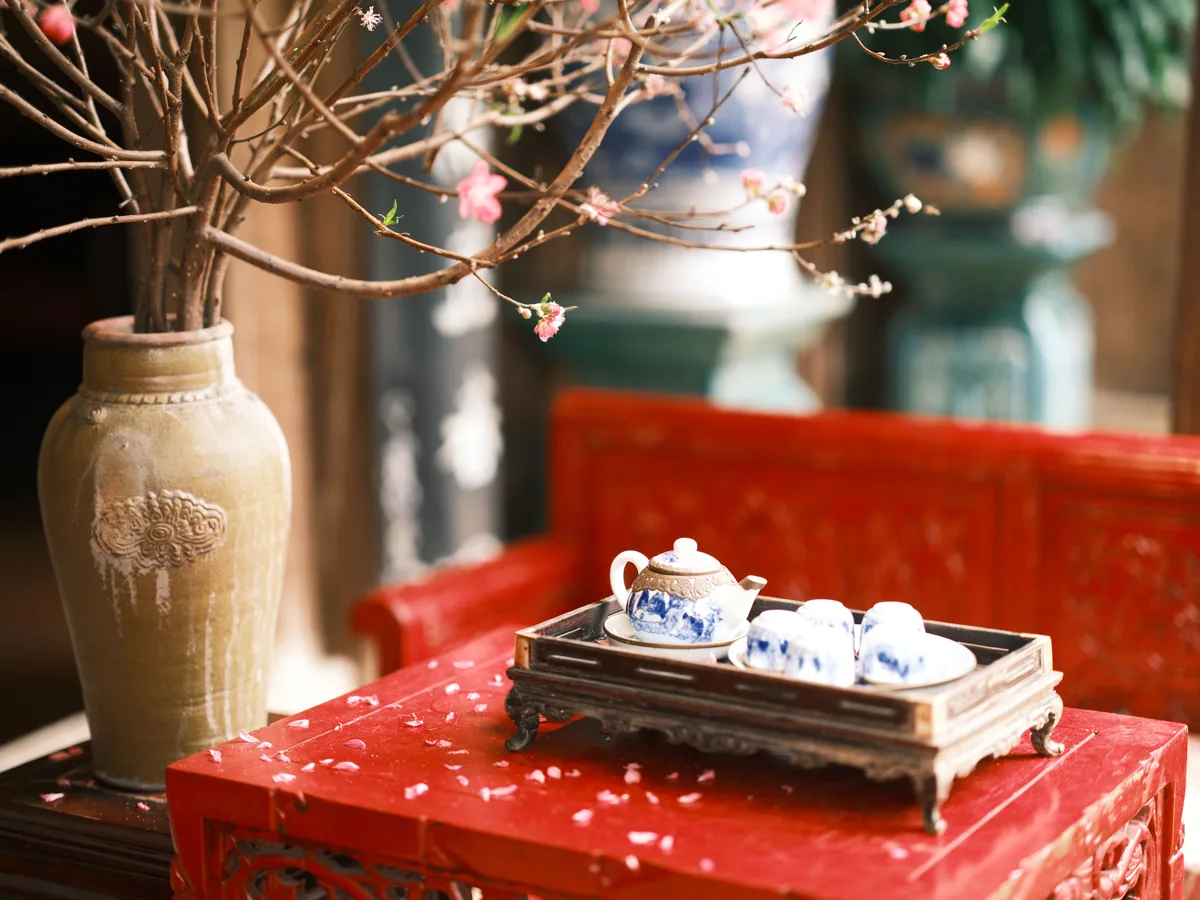
A palace-style dining hall
Lacquered colour, lantern light and a raised stage were built in for what the restaurant's own description calls a 'thousand-year palace' atmosphere.
A menu that changes with the season
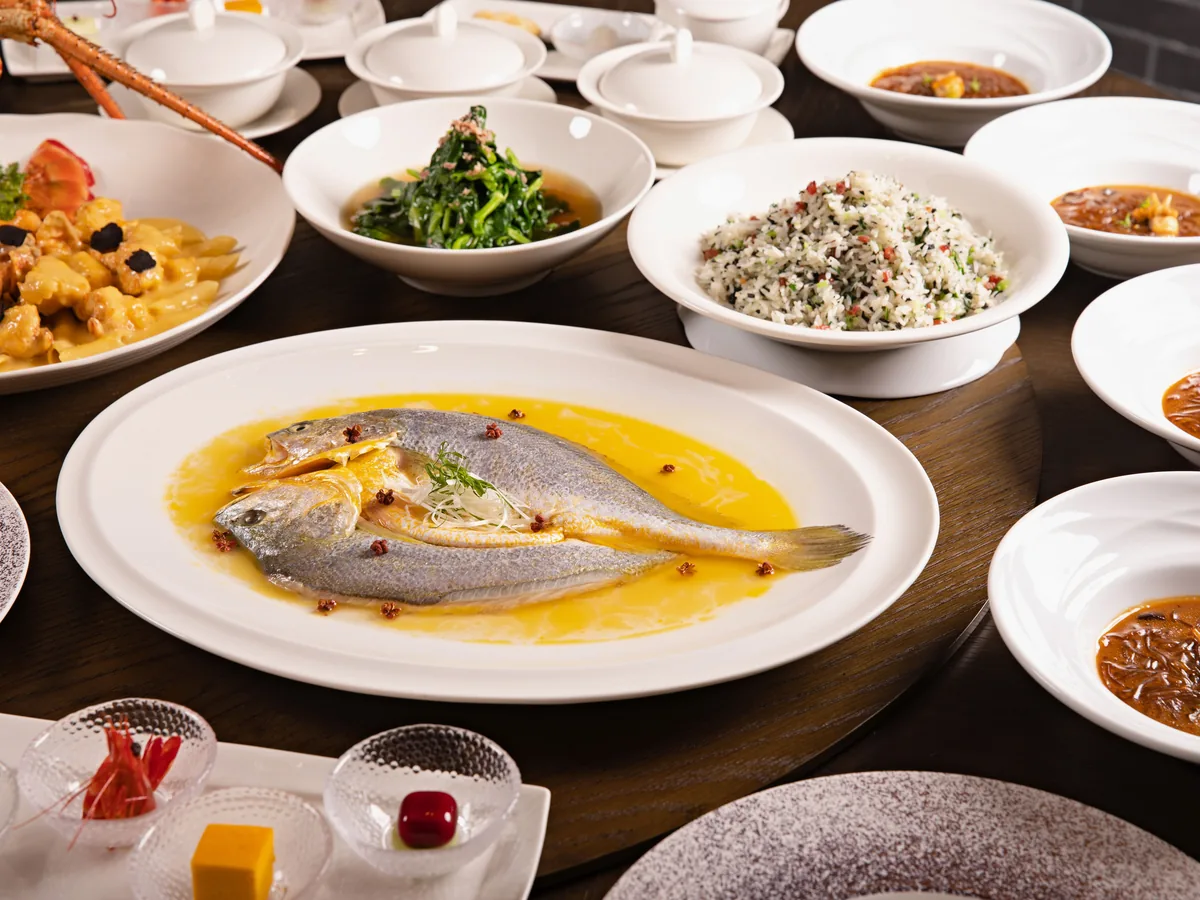
The kitchen runs courses in sequence rather than an à la carte order, and the specific dishes change with the season. A recent sitting opened with Dahongpao tea, a sweet course and osmanthus-green-plum wine, then ran through red-cooked pork with abalone, lychee shrimp balls, steamed wild yellow croaker, a fish maw and abalone soup and fried noodles with scallions, finishing on a fruit course.
A vegetarian version, if you ask ahead
A vegetarian version of the set menu can be requested — flag it when you book rather than once you're at the table.
What the ticket includes
What the ticket includes
| Option | What's included | Who it suits |
|---|---|---|
| The banquet as booked | A seat at either the lunch or dinner sitting, with the full course-by-course menu and the six staged rites that run through it. | Anyone who wants the meal and the performance arranged as one ticket. |
| Hanfu costume add-on | An outfit and styling session in Han-style dress, a paid add-on arranged on site. | Guests who want to dress for the evening before they're seated. |
| Lunch or dinner sitting | The same banquet and performance run twice daily — a midday sitting and an evening sitting, each with its own check-in time. | Groups choosing whichever sitting fits the rest of their day in Shanghai. |
Want to check the exact seating times before you book? See the listing ↗
Getting there, booking and dress
Getting there, booking and dress
Jing'an Temple station, line 7
The hall is about 560 metres from exit 6 of Jing'an Temple station on metro line 7, on Beijing West Road.
Book the sitting, not just the date
Reserve at least 24 hours ahead, as the booking page requires, and choose the lunch or dinner sitting when you book — check-in is fixed to whichever one you pick.
Casual by default, costumed by choice
There's no dress code beyond ordinary daywear. The Hanfu costume and styling option is there for anyone who wants to dress for the part, booked and paid as an extra rather than assumed.
Read more before you go
Read more before you go
A Royal Banquet seating, step by step
From check-in to the last rite — what happens, roughly in order, at either the midday or the evening sitting.
Open the guide →the theme, explainedHan culture and the court-banquet format
What 'Han culture' means here, and why the hall builds its menu around classical court ceremony rather than one single dynasty's story.
Open the guide →what's on the tableThe courses and the dietary options
What's actually served across the sitting, and how to handle a vegetarian request.
Open the guide →what's performedThe music and dances on stage
A closer look at the staged pieces that run between courses.
Open the guide →practical detailsGetting there and choosing your sitting
Where the hall actually is, and how the lunch and dinner sittings differ.
Open the guide →for groups and hostsHosting clients, family and group celebrations
Why this kind of seated, staged banquet works for a group that's planned ahead.
Open the guide →FAQ
Before you book a seating
Is this a lunch or a dinner seating?
Both run daily — a lunch sitting with check-in at 11:30am ahead of a midday start, and a dinner sitting with check-in at 6:30pm ahead of a 7pm start. Choose one when you book.
How long does the banquet run?
Around two hours, sometimes stretching to two and a half, covering the full course-by-course meal and performance.
What's actually on the menu?
A set menu served to everyone at the sitting, with the specific dishes changing seasonally. A recent menu opened with Dahongpao tea, a sweet course and osmanthus-green-plum wine, then ran through red-cooked pork with abalone, lychee shrimp balls, steamed wild yellow croaker, a fish maw and abalone soup, and fried noodles with scallions.
Can I get a vegetarian meal?
A vegetarian version can be requested, but put it on record when you book rather than raising it once you're seated.
What is the Hanfu add-on?
A costume and styling session in Han-style dress — a paid add-on, arranged on site, optional and separate from the ticket price.
How do I get there?
The hall is on Beijing West Road in Jing'an District, about 560 metres from exit 6 of Jing'an Temple station on metro line 7.
What's actually performed?
A sequence of six staged court rites — among them a music rite, a dance rite and a sung theatre rite drawing on forms such as Kunqu — each introducing the next course.
Do I need to book ahead?
Yes, at least 24 hours before your sitting, as set out on the booking page.
More of Shanghai after dark
Check the open seatings
Other Shanghai evenings GetYourGuide lists separately, each on its own ticket.